info@medicampus.edu.mt

(+356) 7709 9274
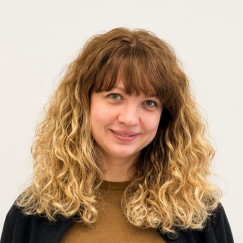
Ass. Prof. Gergana Savova, PhD
Gergana Savova, PhD, is Chief Assistant Professor in Biophysics at the Faculty of Medicine of Trakia University. Her research focuses on radiobiology, cellular responses to ionising and electromagnetic radiation, DNA damage and repair, oxidative stress, membrane biophysics and nanomedicine. She also investigates erythrocyte stability, liposome-based systems and cell–surface interactions using molecular biology, fluorescence, spectrophotometric and cytogenetic techniques.
Education and Positions
2020–present
Chief Assistant Professor in Biophysics, Department of Medical Physics, Biophysics, Roentgenology and Radiology, Faculty of Medicine, Trakia University, Stara Zagora, Bulgaria.
2020
Assistant Professor, Department of Medical Physics, Biophysics, Roentgenology and Radiology, Faculty of Medicine, Trakia University.
2017–2020
PhD, National Centre of Radiobiology and Radiation Protection, Sofia, Bulgaria.
Thesis: Modifiers of the Radiation Cellular Response: Molecular Mechanisms.
2015–2020
Postgraduate Specialisation in Radiobiology, Medical University, Sofia, Bulgaria.
2016
Part-Time Lecturer, Department of Biophysics and Radiobiology, Sofia University “St. Kliment Ohridski”, Bulgaria.
2012–2020
Biologist, National Centre of Radiobiology and Radiation Protection, Sofia, Bulgaria.
2011–2013
Master of Science in Biophysics, Faculty of Biology, Sofia University “St. Kliment Ohridski”, Bulgaria.
Thesis: Investigation of the Influence of 900 MHz Electromagnetic Field and Gamma Radiation on Human Lymphocytes.
2007–2011
Bachelor of Science in Molecular Biology, Faculty of Biology, Sofia University “St. Kliment Ohridski”, Bulgaria.
The Most Significant Publications
KARABALIEV, M.; PAARVANOVA, B.; TACHEVA, B.; SAVOVA, G.; et al. Redox potential of hemoglobin sub-micron particles and impact of layer-by-layer coating. International Journal of Molecular Sciences, 2025, 26: 7341.
KARABALIEV, M.; PAARVANOVA, B.; SAVOVA, G.; TACHEVA, B.; GEORGIEVA, R. In situ monitoring of morphology changes and oxygenation state of human erythrocytes during surfactant-induced hemolysis. Cells, 2025, 14: 469.
SAVOVA, G.; ZAHARIEVA, E.; ANEVA, N.; et al. Association between -94ins/del ATTG mutation in the NFKB1 gene and an early marker of cardiovascular disease in individuals from the general population and individuals occupationally exposed to ionizing radiation. General Medicine, 2025, 27(5): 23–29.
KARABALIEV, M.; PAARVANOVA, B.; SAVOVA, G.; et al. Electrochemical investigation of the stability of poly-phosphocholinated liposomes. Molecules, 2024, 29: 3511.
PAARVANOVA, B.; TACHEVA, B.; SAVOVA, G.; KARABALIEV, M.; GEORGIEVA, R. Hemolysis by saponin is accelerated at hypertonic conditions. Molecules, 2023, 28: 7096.
MOYANKOVA, D.; STOYKOVA, P.; PETROVA, A.; et al. Non-destructive detection of heat stress in tobacco plants using visible-near-infrared spectroscopy and aquaphotomics approach. AgriEngineering, 2026, 8(1): 33.
Professional Activities
Academic and Teaching Activities
Chief Assistant Professor in Biophysics at the Faculty of Medicine, Trakia University.
Previous teaching experience as Part-Time Lecturer at the Department of Biophysics and Radiobiology, Sofia University.
Research Activities
Research focused on biophysics, radiobiology and molecular mechanisms of cellular response to ionising and non-ionising radiation.
Investigation of DNA damage and repair, oxidative stress, mitochondrial function and inflammatory responses.
Research into erythrocyte membrane stability, haemolysis, haemoglobin redox behaviour and membrane–surfactant interactions.
Application of biophysical approaches to nanomedicine and biomaterial research.
Study of electromagnetic-field effects on biological systems and cellular models.
Laboratory and Technical Expertise
Molecular and cellular biology techniques including Western blot, Comet assay, γ-H2AX foci analysis, ELISA, DNA and RNA isolation, real-time PCR and HRM analysis.
Cell-culture techniques using adherent and suspension cells.
Assessment of reactive oxygen species, mitochondrial membrane potential, antioxidant activity and apoptosis.
Cytogenetic techniques including fluorescence in situ hybridisation, micronucleus assay and chromosome-aberration analysis.
Research Projects
Participation in national and international research projects concerning nanotechnologies, synthetic oxygen carriers and transplantation.
Research on ROS-scavenging nanomaterials coated with cell membranes for inflammation modulation.
Participation in projects investigating electromagnetic fields, aquaphotomics, erythrocyte stability and cellular growth on modified surfaces.
Previous research on curcumin and radiation-induced cellular responses.
Scientific Training
Specialised training in biomedical sciences and nanomedicine at Zhejiang University, China.
Training in radiation-effect modelling at the University of Pavia, Italy.
Training in molecular mechanisms of carcinogenesis at Helmholtz Zentrum, Germany.
Training in cellular responses to low-dose radiation at Stockholm University, Sweden.
Professional Qualification
Authorised to perform activities involving sources of ionising radiation, Qualification Group I, valid until 2030.